
AI is Taking Over Logistics in 2026! (What Exporters Must Know)!
If you are in the export-import business, you already know the traditional pain points: mountains of paperwork, unpredictable port delays, opaque freight quotes, and the constant anxiety of customs holds.
For decades, international trade relied heavily on manual processes, phone calls, and spreadsheets. But as we navigate 2026, the script has completely flipped. Artificial Intelligence (AI) is no longer a futuristic buzzword in logistics; it is the engine driving modern supply chains.
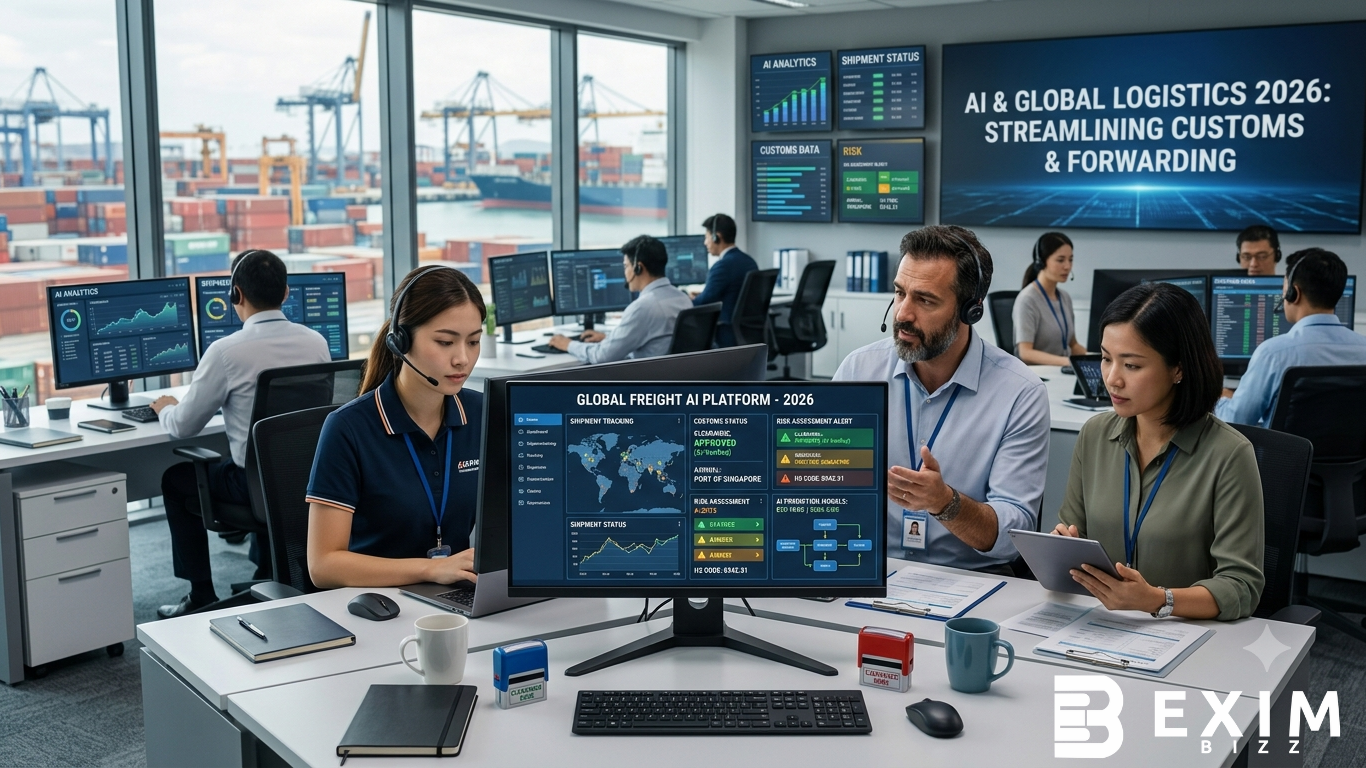
From predicting port congestion to automatically clearing complex customs documentation, AI is transforming customs clearance and freight forwarding from reactive, bottleneck-heavy processes into proactive, seamless operations.
Here is a deep dive into how AI is reshaping the Exim landscape this year, and what it means for your business.
1. The AI Revolution in Customs Clearance: Killing the Paperwork Bottleneck
Customs clearance has historically been the most vulnerable point in the supply chain. A single typo in a document or a misclassified HS (Harmonized System) code can result in heavy fines, seized cargo, or weeks of demurrage charges.
Here is how AI is fixing this in 2026:
Automated Document Verification and Parsing
They were days where we manually had to enter all the concerned data in the system. Advanced AI-powered Optical Character Recognition (OCR) and Natural Language Processing (NLP) can now ingest hundreds of pages of commercial invoices, packing lists, and bills of lading in seconds. The AI cross-references these documents against each other and against specific country regulations to flag discrepancies before the shipment even reaches the port.
Predictive Tariff Classification
Misclassifying an HS code is one of the most common (and expensive) mistakes exporters make. Modern AI tools are now trained on global trade databases and can analyze a product’s technical description, material composition, and intended use to suggest the most accurate HS code. This drastically reduces the risk of compliance penalties and ensures you are claiming the correct duty rates.
Real-Time Regulatory Scanning
Global trade regulations change daily. Whether it’s new sustainability mandates like the EU’s CBAM (Carbon Border Adjustment Mechanism) or sudden tariff hikes, AI algorithms continuously scan global customs databases. They instantly alert freight forwarders and exporters if a new compliance requirement affects their specific cargo, ensuring you are never caught off guard.
2. Transforming Freight Forwarding: From Reactive to Predictive
Freight forwarding used to be about reacting to problems once they happened. Today, AI allows forwarders to predict problems before they occur and optimize the entire journey.
Dynamic Route Optimization
In the past, a freight forwarder would book a route and stick to it. In 2026, AI-driven dynamic routing monitors real-time data—including weather patterns, geopolitical tensions, canal disruptions, and live port congestion levels. If a delay is predicted at a specific transshipment hub, the AI automatically recalculates the most efficient alternative route, saving days of transit time.
Instant, Highly Accurate Quoting
Historically, getting a freight quote required emailing a forwarder and waiting hours or days for a response. Today, machine learning models analyze historical rate data, current fuel surcharges, space availability, and seasonal demand to generate instant, highly accurate freight quotes. This allows exporters to provide precise landed-cost calculations to their overseas buyers much faster, helping them close deals quicker.
Smart Equipment and Predictive Maintenance
For exporters dealing with temperature-sensitive goods (like pharma, chemicals, or perishables), AI is a lifesake. IoT sensors inside “smart containers” feed data back to AI systems that monitor temperature, humidity, and shock in real time. The AI can predict if a reefer (refrigerated) container’s machinery is about to fail and alert the forwarder to intervene before the cargo is compromised.
3. What This Means for Exporters and Importers
You might be thinking, “This sounds great for the logistics companies, but how does it help me?”
The integration of AI in customs and forwarding directly impacts your bottom line in three major ways:
- Drastic Reduction in Hidden Costs: By eliminating document errors and predicting delays, you avoid expensive demurrage, detention, and storage charges at the port.
- Faster Speed-to-Market: Predictive routing and automated customs clearance mean your goods spend less time sitting in transit or waiting at borders, allowing you to fulfill buyer orders faster.
- Better Cash Flow Management: Accurate, instant freight quotes and precise duty calculations mean you can price your products more competitively and manage your working capital with confidence.
4. How Your Business Can Adapt to the AI-Driven Exim World
You don’t need to be a tech giant to benefit from AI in logistics, but you do need to adapt how you choose your partners and manage your data.
- Audit Your Forwarder’s Tech Stack: When selecting a freight forwarder or CHA (Customs House Agent) in 2026, ask them about their technology. Do they offer real-time AI tracking? Do they use automated document checking? If they are still relying on manual emails and Excel, it might be time to switch.
- Clean Up Your Internal Data: AI tools require clean data to work effectively. Ensure your internal product descriptions, weights, and dimensions are standardized and accurate. Garbage in, garbage out.
- Leverage AI for Buyer Communication: Use AI-driven supply chain visibility tools to proactively update your overseas buyers. Instead of them asking, “Where is my cargo?”, send them automated, AI-generated milestone updates. It builds immense trust.
The Bottom Line
In 2026, AI is not replacing the human element in customs clearance and freight forwarding; it is augmenting it. By handing over the repetitive, data-heavy tasks to algorithms, logistics professionals can focus on complex problem-solving and strategic relationship management.
For exporters and importers, embracing this tech-driven shift is no longer optional—it is the key to building a resilient, cost-effective, and highly competitive global supply chain.